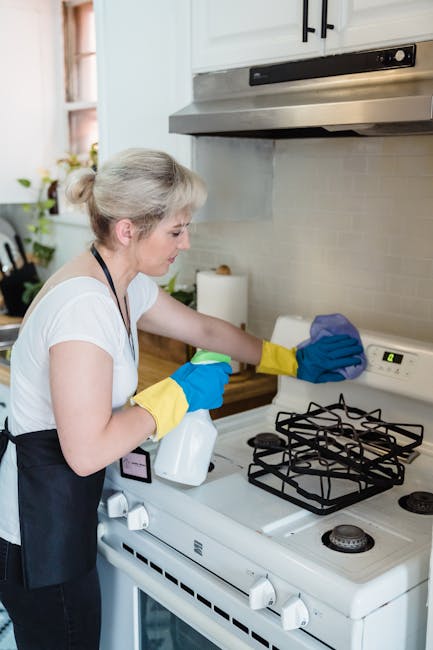
Hidden charges to avoid on Clapham oven cleaning quotes
If you have ever compared oven cleaning prices and thought, "That looks fine... but what happens when they arrive?", you are not alone. Hidden charges to avoid on Clapham oven cleaning quotes is exactly the sort of topic that saves people from an awkward surprise at the door, a suddenly higher bill, or a quote that was never really a quote at all. In Clapham, where homes range from compact flats to busy family kitchens, the details matter. A lot.
This guide breaks down the sneaky extras to watch for, how proper oven cleaning quotes should be structured, and the questions that help you spot a fair price before anyone picks up a sponge. We will also cover practical examples, a simple comparison table, and a checklist you can use before booking. It's the kind of thing you wish you had read before the first time. Truth be told, most unpleasant cleaning bill moments are avoidable.
Why Hidden charges to avoid on Clapham oven cleaning quotes Matters
Oven cleaning seems simple on the surface. One oven, one price, job done. But the reality is often a little messier. Some companies advertise a low headline figure, then add on costs for things that should arguably have been explained from the start: extra racks, a neglected hob, heavy grease, self-cleaning mode residue, or access issues. That is where people get caught out.
Why does this matter so much in Clapham? Because local customers often want fast, convenient booking, especially around tenancy changeovers, post-renovation clear-ups, or before hosting family. If you are already juggling work, school runs, or a move-out deadline, you may skim the quote and miss the small print. A quote that looks cheap can become the most expensive option by the time the invoice lands.
There is also a trust issue. A transparent quote tells you a cleaner has actually thought through the job. It usually means they understand the type of oven, the condition of the appliance, and what is included. A vague quote, by contrast, can be a warning sign. Not always, but often enough to deserve a second look.
In our experience, the worst surprises are not the big dramatic ones. They are the tiny additions: "call-out fee," "deep grease surcharge," "parking not included," or "trays charged separately." One by one, they can turn a sensible price into a frustrating one. And nobody needs that on a Tuesday morning when the kitchen already smells faintly of burnt lasagne.
How Hidden charges to avoid on Clapham oven cleaning quotes Works
A proper oven cleaning quote should show you what the cleaner expects to do, what appliance type they are pricing for, and what the total should cover. The most reliable quotes are specific. They usually distinguish between standard single ovens, double ovens, range cookers, AGA-style appliances, or ovens with extra accessories. That specificity is not just a nice touch. It is the difference between clear pricing and guesswork.
Hidden charges usually appear in one of four places:
- Before the job: A low base price is advertised, but key items are excluded.
- During the visit: The cleaner adds a fee after seeing the oven condition or setup.
- After the job: The invoice includes extras you were not clearly told about.
- At the booking stage: The quote looks complete, but the wording leaves too much room for interpretation.
Some add-ons are reasonable if clearly explained. For example, a heavily burnt oven may genuinely take longer to clean. But "reasonable" and "surprise" are different things. The best cleaning company will explain where the base price ends and where extras might apply, ideally before anyone steps through the front door.
If you want a sense check before booking, the company's pricing and quotes information should help you understand how a clean is likely to be priced. It is also worth checking the firm's terms and conditions, because the fine print is often where the extra charges hide in plain sight.
Key Benefits and Practical Advantages
The obvious benefit of spotting hidden charges is saving money. But the real value goes further than that. A clear quote gives you control. You can compare providers properly, budget without guesswork, and avoid those slightly embarrassing "oh, I didn't realise that was extra" conversations.
Here are the practical advantages of choosing a transparent oven cleaning quote:
- Better price comparison: You can compare like with like, rather than comparing a full price with a half-finished one.
- Less stress on the day: No awkward renegotiation when the cleaner arrives.
- Cleaner expectations: You know what will be cleaned and what will not.
- Fewer disputes: Clear pricing reduces arguments after the job.
- Better service quality: A detailed quote usually reflects a more professional approach.
There is another, quieter benefit. Once you know the common hidden charges, you become a better customer. Not difficult, just informed. You ask sharper questions, and cleaners tend to respond more clearly. That tends to improve the whole experience.
Expert summary: The best oven cleaning quote is not the cheapest one on first glance; it is the one that clearly states what is included, what might cost extra, and when those extras would actually apply.
Who This Is For and When It Makes Sense
This topic matters for far more people than you might think. If you are a tenant moving out, a landlord preparing a property, a homeowner tackling a grim oven after months of family use, or a busy professional who just wants one reliable clean, the same rule applies: know what you are paying for.
It is especially relevant if:
- you are booking an end-of-tenancy clean and need the kitchen to look presentable
- you have not had the oven professionally cleaned for a long time
- you have a double oven, range cooker, or additional hob area
- there are access challenges such as narrow stairwells or limited parking
- you need the work done quickly and feel tempted to accept the first quote you get
People often ask whether it is even worth worrying about small extras. Honestly? Yes. A five or ten pound add-on is not the end of the world, but a bundle of them can quickly distort the quote. If you are also planning other home cleaning work, you might compare the overall approach of a cleaning company rather than looking only at one isolated job. The more services you need, the more important pricing clarity becomes.
For households that book other recurring or one-off services, it can also help to understand how quotes are explained for one-off cleaning and similar services. The pattern is the same: a clear scope avoids confusion later.
Step-by-Step Guidance
Here is the simplest way to protect yourself from hidden charges, without turning the whole thing into a research project.
- Describe the oven accurately. Tell the cleaner whether it is a single oven, double oven, range cooker, or another type. Mention any visible heavy grease, burnt-on residue, broken seals, or unusual features.
- Ask what the base quote includes. Does it cover the oven interior only, or also racks, trays, glass doors, seals, fan covers, and hob burners? The answer matters more than people think.
- Ask which extras may apply. Do they charge more for very dirty ovens, parking, late arrival, extra appliances, or difficult access? If yes, under what circumstances?
- Request the total price in writing. You want the expected final figure, not just a starting price.
- Check whether VAT is included. Some firms mention prices before VAT, which can make a quote look lower than it really is.
- Read the fine print. Look for wording about call-out fees, minimum charges, cancellation charges, or "subject to inspection."
- Confirm payment method and timing. Know whether payment is taken on completion, in advance, or through a card terminal. If the business uses secure payment processes, that should be explained clearly, ideally alongside its payment and security information.
- Take a photo if the oven is unusually bad. A quick picture before booking can help avoid later disagreement. Nothing fancy. Just practical.
A very normal scenario: you get a quote for a single oven cleaning, but the cleaner arrives and sees a separate grill compartment, removable door panes, and a heavily burnt tray rail. If none of that was discussed beforehand, the price can change. That does not automatically mean anyone is dishonest. It means the quote was incomplete. Small difference, big result.
Expert Tips for Better Results
Once you know the common traps, the next step is learning how to ask better questions. Here are the ones that usually uncover hidden charges quickly.
- "What is included in the quoted price?" This forces a cleaner to define the job.
- "What counts as an extra?" Useful for spotting vague pricing.
- "Do you charge more for heavy carbon build-up or burnt-on grease?" A fair question, especially for older ovens.
- "Is parking or congestion a separate cost?" Very relevant in London, where parking can be the silent budget killer.
- "Are your prices fixed or estimates?" Fixed is better if your oven details are accurate.
- "Will you remove and clean the oven door glass?" A surprisingly common grey area.
Another useful tip: ask for the quote to be broken down by appliance type if more than one item is being cleaned. If you also need related work, such as deep cleaning or domestic cleaning, a good provider should still keep each service distinct enough that you can see where the money is going.
And if the cleaner's answer feels woolly, trust that feeling. Not always, but usually it is trying to tell you something.
Common Mistakes to Avoid
The biggest mistake is assuming all oven cleaning quotes work the same way. They do not. Not even close. Here are the traps people fall into most often.
- Only looking at the headline price. A very cheap starting price can be bait.
- Not checking the appliance type. A range cooker is not priced like a small single oven, and pretending otherwise creates trouble.
- Ignoring access issues. Tight staircases, no lift, or awkward parking can affect the cost in real life.
- Failing to mention accessories. Extra shelves, trays, lids, or detachable parts can add time.
- Assuming "all included" really means all included. It might, or it might mean "all included unless we decide otherwise." That phrasing is doing a lot of work.
- Not confirming the final total before the job begins. This is where confusion often becomes a bill.
A smaller mistake, but still important, is booking in a hurry because the kitchen "looks bad enough already." Fair enough, everyone has those days. But a two-minute check of the quote can save you from a much longer complaint later.
Tools, Resources and Recommendations
You do not need anything complicated to avoid surprise charges. In fact, a simple approach tends to work best. Use a notes app, a quick photo, and a short list of questions. That is enough for most bookings.
Useful things to have ready before asking for a quote:
- a photo of the oven interior and exterior
- the approximate oven type and size
- details of any extra hobs, racks, or trays
- information about parking or access limitations
- your preferred cleaning date and time window
If you want to compare services more broadly, the company's pages on oven cleaning and the specialist oven cleaner service can give you a better sense of what a professional clean usually involves. The same care applies if you are choosing related services such as carpet cleaning, sofa cleaning, upholstery cleaning, or window cleaning. Different service, same principle: clear scope, clear price.
If you are comparing providers, pricing and quotes should always be your first stop. If the quote page is vague, the service likely is too. Not a rule, just a pattern you will notice after a while.
Law, Compliance, Standards, or Best Practice
This is not usually a highly regulated area in the way that some trades are, but there are still sensible UK expectations around fair trading, clear pricing, and accurate descriptions. In plain English, a customer should not be misled by a headline rate that leaves out important conditions. A business should explain material costs clearly and not spring them on you after the work is done.
For practical purposes, best practice in oven cleaning quotes usually includes:
- clear identification of the appliance type
- the scope of work written in plain language
- any likely extra charges explained upfront
- payment terms that are easy to understand
- reasonable cancellation or rescheduling terms
On the business side, trust signals matter too. Pages such as about us, insurance and safety, health and safety policy, and complaints procedure help you judge whether a company takes its responsibilities seriously. If those pages are easy to find and clearly written, that usually says something good about the way the company handles the rest of its work too.
It is also fair to look at whether the business explains privacy and payment handling properly. That is part of trust, not an optional extra. People tend to focus only on the oven, but the way a company handles your information and your money says a lot about how it handles the job itself.
Options, Methods, or Comparison Table
Different quoting styles create very different customer experiences. Here is a simple comparison.
| Quote style | What it usually looks like | Risk of hidden charges | Best for |
|---|---|---|---|
| Fixed quote | One total price with clear inclusions | Low, if the oven details are accurate | People who want certainty |
| Estimate | Approximate price that may change after inspection | Medium | Older ovens or unclear conditions |
| Headline-from price | Very low starting price with lots of exclusions | High | Mostly marketing, not peace of mind |
| Tiered quote | Price changes depending on oven type or dirt level | Medium to low, if explained well | Customers with more complex appliances |
In practical terms, a fixed quote is usually easiest for simple jobs. Estimates can still be fine, but only if you understand what could change the price. Headline-from pricing is where people get caught out most often. It can work, but only if you read every line carefully. Which, let's be honest, most of us do not when we are in a rush.
Case Study or Real-World Example
Here is a realistic example based on the sort of booking people make all the time in Clapham. A tenant is moving out of a two-bedroom flat and needs the oven cleaned before the inventory check. They receive two quotes. The first says "oven clean from GBP45." The second says "single oven clean GBP55, includes racks, shelves, door glass, and degreasing; parking extra only if not free nearby."
The first quote looks cheaper. Naturally, that is tempting. But after booking, the cleaner spots heavy grease, charges extra for the door glass, and adds a call-out fee because the street has limited parking. The final price is no longer GBP45. It is noticeably more, and the tenant has very little room to argue because the wording was vague from the start.
The second quote is slightly higher on paper, but it is clearer. The customer knows what is included and can budget with confidence. That is the real lesson. The cheapest quote is often not the cheapest experience.
In a busy household, this difference feels even bigger. You can smell the cleaner oven, hear the timer going off again because dinner is still being juggled, and suddenly you realise you do not want another surprise today. Fair enough.
Practical Checklist
Use this quick checklist before accepting any oven cleaning quote in Clapham.
- Have I correctly described the oven type?
- Do I know exactly what is included in the price?
- Have I asked about racks, trays, shelves, and door glass?
- Have I checked for possible extras such as heavy grease or unusual access?
- Is VAT included or clearly stated?
- Have I asked whether parking or call-out fees apply?
- Do I have the quote in writing?
- Have I read the terms and conditions?
- Do I understand the payment method and timing?
- Have I compared the quote against at least one other provider?
If you can tick most of those off, you are in a strong position. If not, pause and ask one more question. That small pause can save you from a frustrating bill.
Conclusion
Hidden charges to avoid on Clapham oven cleaning quotes is really about one thing: clarity. A good quote should help you feel informed, not cornered. It should tell you what is included, what may cost extra, and why. Once you know the usual traps, it becomes much easier to spot a fair offer and skip the awkward surprises.
For most people, the smartest move is simple. Ask a few precise questions, get the total in writing, and check the small print before the cleaner arrives. That is usually enough to keep the price honest and the experience smooth. And if a quote feels fuzzy, trust that instinct. It usually has a reason.
For a fuller view of service details, you can also review the company's pricing and quotes and supporting policy pages before booking. A little checking now can save a lot of bother later.
Get a free quote today and see how much you can save.
Frequently Asked Questions
What are the most common hidden charges on oven cleaning quotes?
The most common extras are charges for heavy grease, extra racks or trays, door glass cleaning, parking, call-out fees, and awkward access. Some firms also separate VAT or treat certain oven types as a different price band.
How do I know if a Clapham oven cleaning quote is fair?
A fair quote should clearly state the appliance type, what is included, whether VAT is included, and which extras might apply. If the wording is vague or the price seems unusually low, ask for a full breakdown.
Should oven cleaning prices include racks and shelves?
Often they do, but not always. This is one of the first things to confirm. Racks and shelves take time, so if they are not included in the base price, you should know that before booking.
Can a cleaner charge more after seeing how dirty the oven is?
Yes, sometimes, especially if the oven condition was not described accurately. That said, the cleaner should explain this possibility before the appointment, not spring it on you after the work has started.
Do I need to pay for parking or congestion separately?
In London, this can happen. Some businesses include travel costs; others do not. It is sensible to ask, because parking fees can quietly change the overall price more than expected.
Is a fixed price better than an estimate?
Usually, yes, if you have described the oven properly. A fixed price gives more certainty. An estimate is still useful for complex or badly neglected ovens, but you should understand what could change the final figure.
What should I ask before accepting an oven cleaning quote?
Ask what the price includes, what counts as an extra, whether VAT is included, whether parking is charged separately, and whether the final total is fixed or subject to inspection. Those questions usually reveal most hidden charges quickly.
Are low starting prices always a bad sign?
Not always, but they deserve caution. A very low headline price can be fine if the inclusions are generous and clearly written. If the quote feels stripped back, the missing details may be where the costs are hiding.
Should I get oven cleaning in writing?
Yes. Written quotes are much easier to compare and far easier to refer back to if there is confusion later. Even a short email confirmation is better than relying on memory.
What if the quote says "subject to inspection"?
That usually means the price may change after the cleaner sees the oven in person. This is not automatically unfair, but you should ask what specific factors could affect the cost before you agree.
Can hidden charges affect end-of-tenancy cleaning too?
Yes, absolutely. If you are booking a broader service such as end of tenancy cleaning, oven pricing may be bundled into the overall package or priced separately. Always check where the oven clean sits in the total.
What is the best way to avoid surprise fees altogether?
The best approach is to give accurate details, ask for a full written quote, and confirm any extras before booking. A good provider will answer clearly and will not make you feel silly for asking. That is usually a very good sign.